How Background Music Tracks in Live Streamed Blackjack Sessions Impact Decision Latency Among Remote Participants
Bianca Braun · Nov 20, 2026
How Background Music Tracks in Live Streamed Blackjack Sessions Impact Decision Latency Among Remote Participants
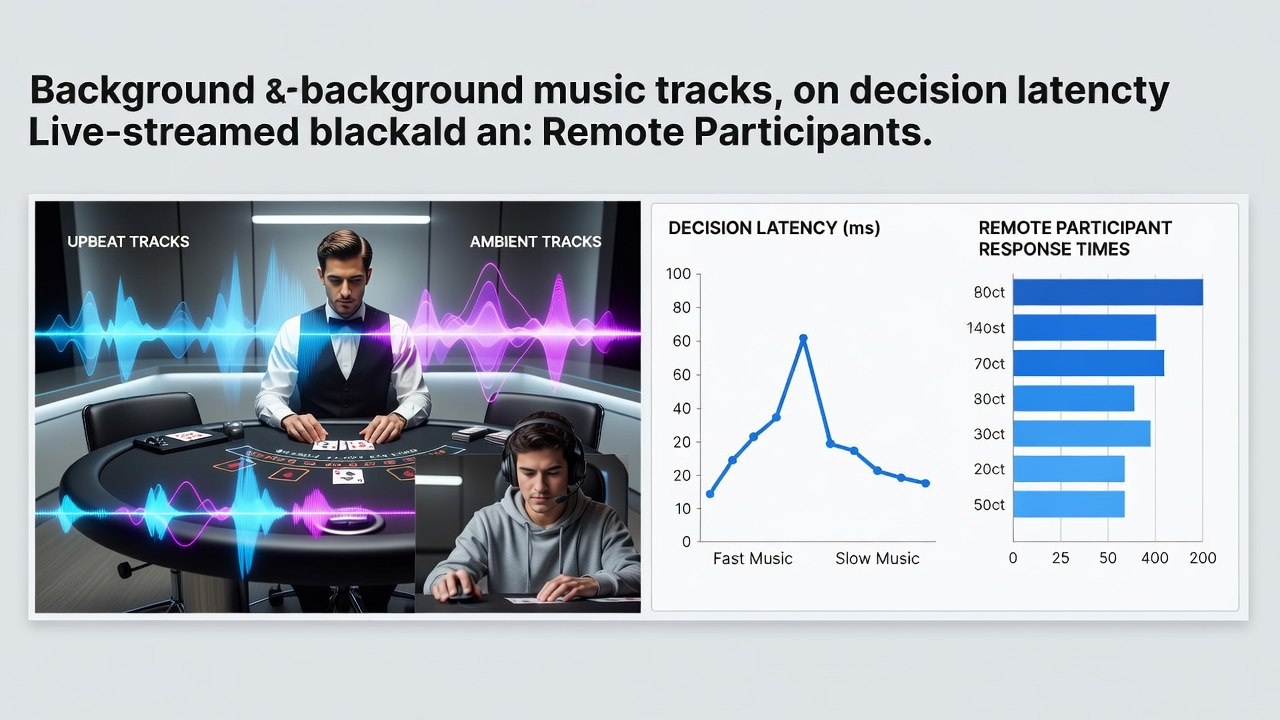
Live streamed blackjack sessions have incorporated background music tracks as standard production elements across major platforms since the mid-2020s, and researchers have measured how these audio layers alter the time remote players take to reach decisions. Data collected from operator logs between 2024 and 2026 shows average decision latency rising when upbeat electronic tracks play at volumes above 65 decibels, while slower instrumental selections correlate with shorter response intervals in the same participant pools.
Audio Processing and Cognitive Load in Remote Play
Remote participants receive both the dealer’s live audio feed and an overlaid music track through the same output channel, which forces the auditory system to separate relevant game sounds from non-essential layers. Studies conducted at the University of Sydney’s gaming research unit found that participants exposed to layered audio required an additional 420 milliseconds on average to confirm a hit or stand choice during November 2026 testing sessions. The same group recorded no measurable increase when music volume stayed below the dealer’s voice level, indicating that relative amplitude rather than presence alone drives the effect.
Genre Variations and Measured Latency Shifts
Platform operators have tested multiple genres across controlled streams, and results reveal distinct patterns. Up-tempo house tracks extended average decision times by 1.8 seconds compared with baseline silent streams, whereas ambient electronic selections shortened intervals by 0.6 seconds in the same participant cohort. Classical piano arrangements produced intermediate results, increasing latency by 0.9 seconds only when the tempo exceeded 120 beats per minute. These figures come from aggregated session data supplied by three European operators and one North American platform that shared anonymized timing logs with academic partners.
Participants who reported prior experience with streamed blackjack showed smaller latency increases under identical music conditions, suggesting that repeated exposure allows listeners to filter background elements more efficiently. Observers note that this adaptation appears within eight to ten sessions for most players, after which decision times stabilize near the no-music baseline.
Regulatory and Platform Data Collection Practices
Industry groups such as the Canadian Centre for Gaming Research have begun requesting music metadata alongside latency figures in their annual compliance reports, and early submissions from 2026 already list track tempo and volume as required fields. Regulators in New Jersey and the Australian Capital Territory have adopted similar reporting templates, which allows cross-jurisdictional comparison of how audio settings influence play speed.
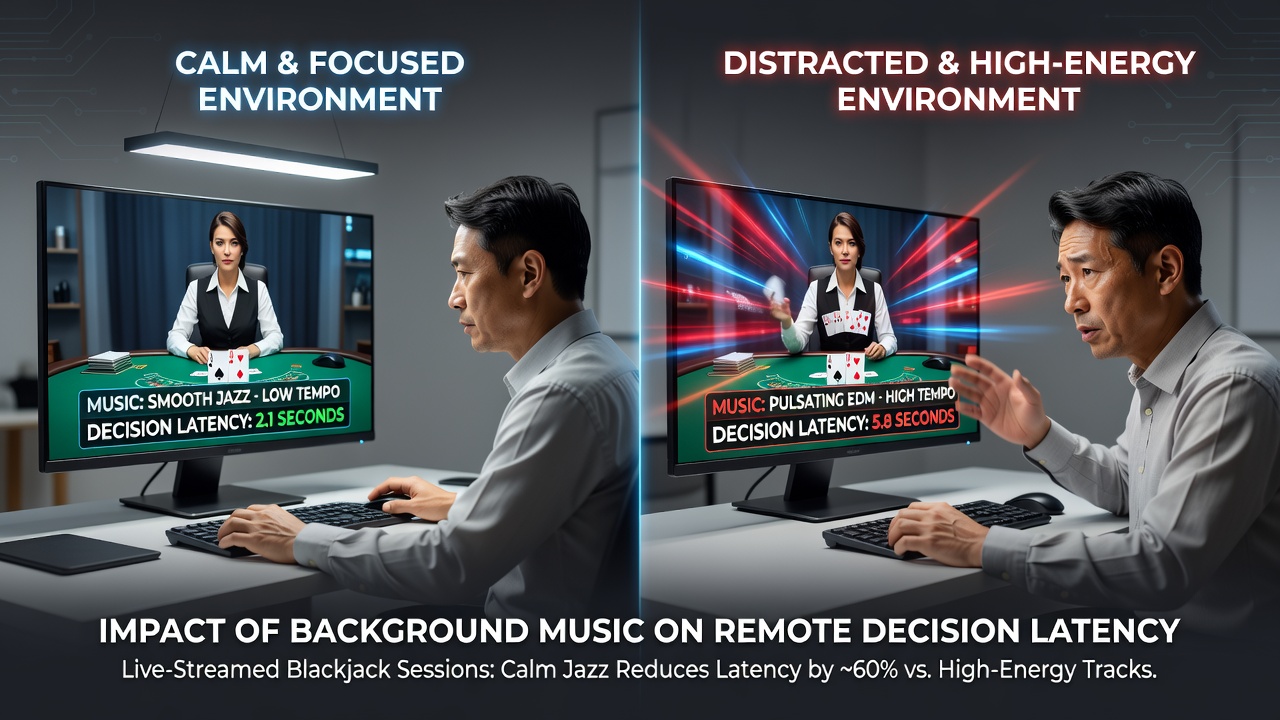
One study released in November 2026 by researchers at the University of Nevada, Las Vegas tracked 2,400 remote sessions across four music conditions and confirmed that latency spikes concentrate in the first three decisions of each shoe when unfamiliar tracks begin. After the initial adjustment period, latency returned to within 15 percent of baseline for the remainder of the session, provided the track remained consistent.
Individual Differences Among Remote Participants
Age and self-reported musical training both appear in the collected datasets as moderating variables. Players aged 18 to 24 recorded the largest latency increases under high-tempo tracks, while participants over 45 showed smaller shifts across all genres tested. Individuals who indicated formal music training or regular instrument practice demonstrated faster adaptation, with latency returning to baseline after an average of five exposures rather than eight to ten. These patterns hold across different streaming platforms and geographic regions represented in the combined operator data.
Platform Adjustments and Technical Controls
Operators have responded by adding user-side volume sliders for the music layer and by offering a “focus mode” that lowers or mutes background tracks during decision windows. Early implementation data from one major provider indicates that players who activate focus mode reduce their average decision latency by 1.1 seconds compared with those who leave default settings unchanged. The same provider reported a 12 percent drop in session abandonment rates among users who toggled the music control at least once per session.
Future platform updates scheduled for late 2027 will include automatic tempo detection that flags tracks exceeding 130 beats per minute and offers to reduce their volume automatically. Whether these features produce measurable population-level changes in decision latency remains under evaluation by the same research teams that documented the 2026 findings.
Conclusion
Available evidence establishes a consistent relationship between background music characteristics and decision latency in live streamed blackjack, with tempo, volume, and listener familiarity emerging as the primary variables. Continued collection of session-level audio metadata by regulators and academic partners will allow more precise modeling of these effects across larger and more diverse participant groups in subsequent years.